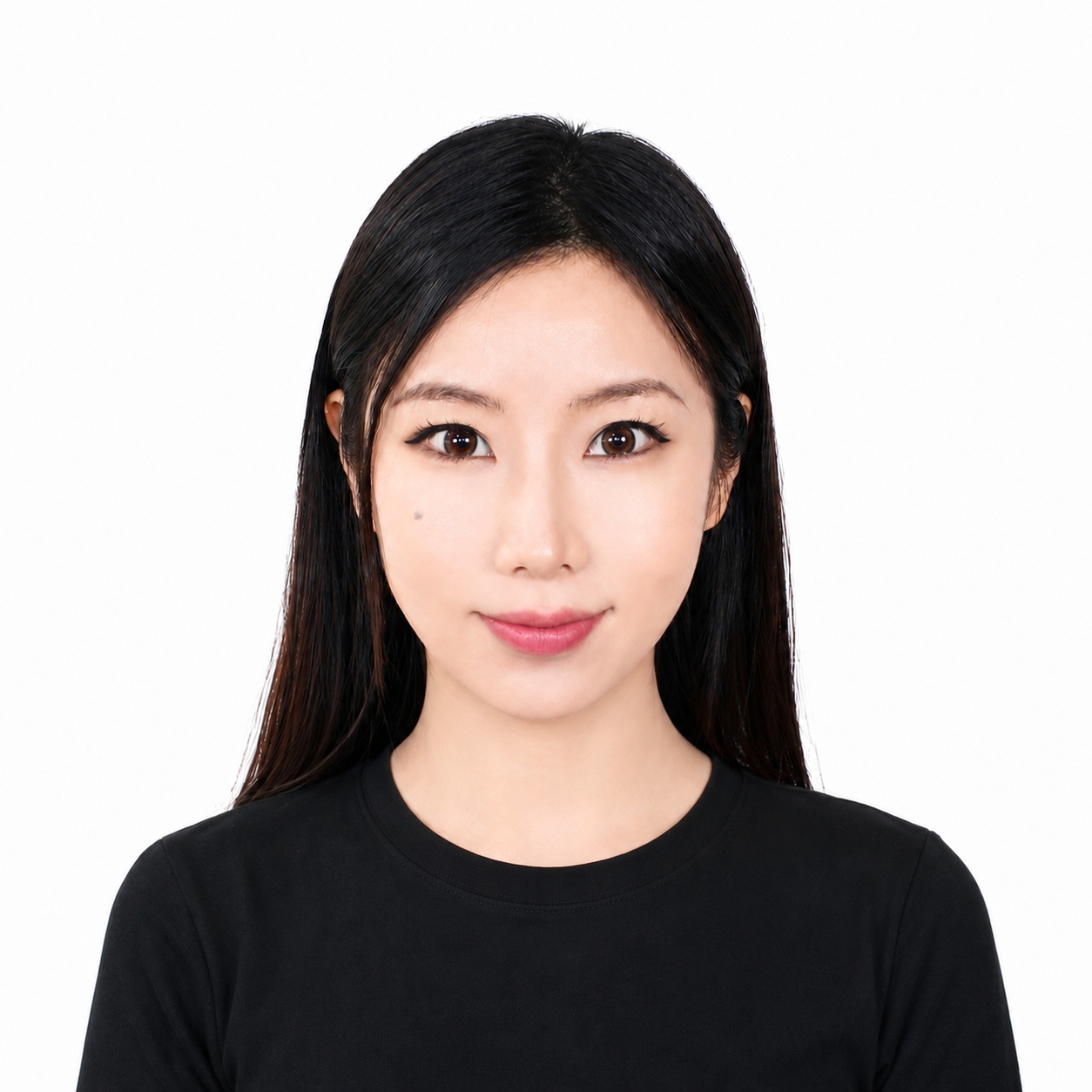
Jingwei Wei
Institute of Automation, Chinese Academy of Sciences
Email: weijingwei2014@ia.ac.cn
Address: 5th Floor, Automation Building, Zhongguancun East Road No. 95, Haidian District, Beijing, China
Postal Code: 100190
Research Areas
Multimodal Large Models
Vision Foundation Models
Large Models and Their Clinical Applications
Radiomics
Multi-omics
Education
Ph.D., University of Chinese Academy of Sciences, 2014–2019
Experience
Work Experience
- Associate Researcher, Key Laboratory of Molecular Imaging, and Zidongtaichu Foundation Research Center, Institute of Automation, Chinese Academy of Sciences, 2021–Present
- Assistant Researcher, Key Laboratory of Molecular Imaging, Institute of Automation, Chinese Academy of Sciences, 2019–2021
Publications
Papers
- MorphSeek: Fine-grained Latent Representation-Level Policy Optimization for Deformable Image Registration, Proceedings of the 2026 IEEE/CVF Conference on Computer Vision and Pattern Recognition (CVPR), 2026, Fifth Author, Corresponding Author
- Decoding Tumor Heterogeneity with Imaging Biomarkers Predicts Response to TACE plus Immunotherapy and Targeted Therapy in HCC, Hepatology, 2025, Second Author
- VLM-based Prompts as the Optimal Assistant for Unpaired Histopathology Virtual Staining, Proceedings of the 33rd ACM International Conference on Multimedia, 2025, Eighth Author, Corresponding Author
- Multi-omics Synergy in Oncology: Unraveling the Complex Interplay of Radiomic, Genoproteomic, and Pathological Data, Intelligent Oncology, 2025, Ninth Author, Corresponding Author
- Evolving Strategies in the Diagnosis and Treatment of HIV-associated Neurocognitive Disorders, Reviews in the Neurosciences, 2025, Second Author
- Application of Large Models in Imaging Diagnosis and Prognostic Analysis in Hepatocellular Carcinoma, Clinical Surgical Oncology, 2025, Sixth Author, Corresponding Author
- Noninvasive Prognostic Classification of ITH in HCC with Multi-omics Insights and Therapeutic Implications, Science Advances, 2025, Third Author
- Adaptive Multiphase Liver Tumor Segmentation With Multiscale Supervision, IEEE Signal Processing Letters, 2024, Fourth Author, Corresponding Author
- Breaking Boundaries in Radiology: Redefining AI Diagnostics via Raw Data Ahead of Reconstruction, Physics in Medicine and Biology, 2024, Fifteenth Author
- Large Scale Models in Radiology: Revolutionizing the Future of Medical Imaging, Radiology Science, 2024, Fourth Author
- A Multi-scale, Multi-region and Attention Mechanism-based Deep Learning Framework for Prediction of Grading in Hepatocellular Carcinoma, Medical Physics, 2023, First Author
- Radiomics: A Radiological Evidence-based Artificial Intelligence Technique to Facilitate Personalized Precision Medicine in Hepatocellular Carcinoma, Digestive and Liver Disease, 2023, First Author
- Radiomics-Based Preoperative Prediction of Lymph Node Metastasis in Intrahepatic Cholangiocarcinoma Using Contrast-Enhanced Computed Tomography, Annals of Surgical Oncology, 2022, Fourth Author
- CT-based Radiomics to Predict Development of Macrovascular Invasion in Hepatocellular Carcinoma: A Multicenter Study, Hepatobiliary & Pancreatic Diseases International, 2022, First Author
- Predicting Microvascular Invasion in Hepatocellular Carcinoma: A Dual-institution Study on Gadoxetate Disodium-enhanced MRI, Liver International, 2022, Second Author
- Advances in Artificial Intelligence Techniques Drive the Application of Radiomics in the Clinical Research of Hepatocellular Carcinoma, iLiver, 2022, First Author
- Prediction of Microvascular Invasion in Hepatocellular Carcinoma via Deep Learning: A Multi-center and Prospective Validation Study, Cancers, 2021, First Author
- Deep Learning-based Radiomics Predicts Response to Chemotherapy in Colorectal Liver Metastases, Medical Physics, 2021, First Author
- Multi-Omics and Its Clinical Application in Hepatocellular Carcinoma: Current Progress and Future Opportunities, Chinese Medical Sciences Journal, 2021, Fourth Author
- A Radiomics-based Approach for Predicting Early Recurrence in Intrahepatic Cholangiocarcinoma after Surgical Resection: A Multicenter Study, Proceedings of the 2021 43rd Annual International Conference of the IEEE Engineering in Medicine and Biology Society (EMBC), 2021, Fourth Author
- Radiomics in Liver Diseases: Current Progress and Future Opportunities, Liver International, 2020, First Author
- Improving B-mode Ultrasound Diagnostic Performance for Focal Liver Lesions Using Deep Learning: A Multicentre Study, eBioMedicine, 2020, Second Author
- Radiomics Based on MRI as a Biomarker to Guide Therapy by Predicting Upgrading of Prostate Cancer From Biopsy to Radical Prostatectomy, Journal of Magnetic Resonance Imaging, 2020, Third Author
- Multiparametric MRI-Based Radiomics for Prostate Cancer Screening With PSA in 4–10 ng/mL to Reduce Unnecessary Biopsies, Journal of Magnetic Resonance Imaging, 2020, Third Author
- A Radiomics-based Biomarker for Cytokeratin 19 Status of Hepatocellular Carcinoma With Gadoxetic Acid-enhanced MRI, European Radiology, 2020, Third Author
- Identification of Predominant Histopathological Growth Patterns of Colorectal Liver Metastasis by Multi-habitat and Multi-sequence Based Radiomics Analysis, Frontiers in Oncology, 2020, Third Author
- MRI-Based Radiomics Signature: A Potential Biomarker for Identifying Glypican 3-Positive Hepatocellular Carcinoma, Journal of Magnetic Resonance Imaging, 2020, Third Author
- Accurate Preoperative Distinction of Intracranial Hemangiopericytoma From Meningioma Using a Multihabitat and Multisequence-Based Radiomics Diagnostic Technique, Frontiers in Oncology, 2020, First Author
- Preoperative Radiomics Nomogram for Microvascular Invasion Prediction in Hepatocellular Carcinoma Using Contrast-enhanced CT, European Radiology, 2019, Second Author
- Radiomics Facilitates Candidate Selection for Irradiation Stents Among Patients With Unresectable Pancreatic Cancer, Frontiers in Oncology, 2019, Fourth Author
- Development and Validation of a Radiomics-based Method for Macrovascular Invasion Prediction in Hepatocellular Carcinoma With Prognostic Implication, Medical Imaging 2019: Computer-Aided Diagnosis (SPIE), 2019, First Author
- Prediction of Histopathologic Growth Patterns of Colorectal Liver Metastases With a Noninvasive Imaging Method, Annals of Surgical Oncology, 2019, Second Author
- Prediction of Early Recurrence of Hepatocellular Carcinoma Eligible for Curative Ablation Using a Radiomics Nomogram, Cancer Imaging, 2019, Sixth Author
- CT Radiomics May Predict the Grade of Pancreatic Neuroendocrine Tumors: A Multicenter Study, European Radiology, 2019, Fourth Author
- Pretreatment Prediction of Immunoscore in Hepatocellular Cancer: A Radiomics-based Clinical Model Based on Gd-EOB-DTPA-enhanced MRI Imaging, European Radiology, 2019, Third Author
- Selection Between Liver Resection Versus Transarterial Chemoembolization in Hepatocellular Carcinoma: A Multicenter Study, Clinical and Translational Gastroenterology, 2019, Second Author
- Non-invasive Genotype Prediction of Chromosome 1p/19q Co-deletion by Development and Validation of an MRI-based Radiomics Signature in Lower-grade Gliomas, Medical Imaging 2019: Computer-Aided Diagnosis (SPIE), 2019, Sixth Author
- The Applications of Radiomics in Precision Diagnosis and Treatment of Oncology: Opportunities and Challenges, Theranostics, 2019, Fourth Author
- A Multi-sequence and Habitat-based MRI Radiomics Signature for Preoperative Prediction of MGMT Promoter Methylation in Astrocytomas With Prognostic Implication, European Radiology, 2019, First Author
- Radiomics Analysis Enables Recurrence Prediction for Hepatocellular Carcinoma After Liver Transplantation, European Journal of Radiology, 2019, Fourth Author
- A Radiomics Nomogram May Improve the Prediction of IDH Genotype for Astrocytoma Before Surgery, European Radiology, 2019, Third Author
- A Radiomics Nomogram for Preoperative Prediction of Microvascular Invasion in Hepatocellular Carcinoma, Liver Cancer, 2019, Third Author
- Radiomics Analysis Enables Response Prediction for Hepatocellular Carcinoma After Liver Transplantation, European Journal of Radiology, 2019, Fourth Author
- Non-invasive Genotype Prediction of Chromosome 1p/19q Co-deletion by Development and Validation of an MRI-based Radiomics Signature in Lower-grade Gliomas, Journal of Neuro-Oncology, 2018, Eighth Author
- Radiomics Analysis Allows for Precise Prediction of Epilepsy in Patients With Low-grade Gliomas, NeuroImage: Clinical, 2018, Seventh Author
Students
现指导学生
林佳沛 硕士研究生 081104-模式识别与智能系统
Short Biography
Dr. Jingwei Wei is an Associate Researcher and Master's Supervisor at the Institute of Automation, Chinese Academy of Sciences (CASIA), and currently serves as Visiting Associate Professor and Investigator in the Department of Radiology at Harvard Medical School and Massachusetts General Hospital.
She serves as a committee member of the Intelligent Optical Imaging Committee of the Chinese Association for Artificial Intelligence (CAAI), a member of the Artificial Intelligence Group of the Liver Cancer Committee of the Chinese Medical Doctor Association, and Vice Chair of the Youth Committee of the Oncology Branch of the Cross-Strait Medical and Health Exchange Association. She is also an editorial board member of several international journals, including iLiver, Clinical Surgical Oncology, Radiology Science, and VCIBA, and serves as a reviewer for leading journals such as The Lancet Digital Health, NEJM AI, IEEE Journal of Biomedical and Health Informatics (JBHI), eClinicalMedicine, and Advanced Science.
Dr. Wei has led or participated as a sub-project principal investigator in more than 15 national research projects, including China's National Key R&D Program and major and key projects funded by the National Natural Science Foundation of China (NSFC), with ongoing research funding exceeding RMB 7.5 million.
Her research focuses on medical multimodal foundation models, radiomics, and multi-omics artificial intelligence. She has established long-term collaborations with more than twenty leading tertiary hospitals across China, including Beijing Friendship Hospital, Cancer Hospital of the Chinese Academy of Medical Sciences, Chinese PLA General Hospital, Peking Union Medical College Hospital, Zhongshan Hospital of Fudan University, and West China Hospital. Together, these collaborations have enabled the collection of over 100,000 multimodal medical cases, including medical imaging, clinical text, and sequencing data.
As first author or corresponding author (including co-first and co-corresponding authorships), Dr. Wei has published more than 40 peer-reviewed papers in interdisciplinary fields spanning medicine, artificial intelligence, and biomedical engineering. Her publications include articles in leading journals such as Hepatology, Science Advances, and eBioMedicine, as well as papers presented at top-tier international conferences including CVPR, ACM Multimedia, and MICCAI. Her work has received more than 3,900 citations, with an H-index of 26. She has also contributed as a principal author to one Elsevier book in the MICCAI series and one Springer book chapter in the Intelligent Systems series.
Dr. Wei's group is supported by extensive clinical collaborations, large-scale medical data resources, and substantial GPU computing infrastructure. Current research interests include medical multimodal foundation models, medical vision-language models (VLMs), radiomics, multi-omics analysis, and clinical applications of artificial intelligence.
Highly motivated undergraduate and graduate students interested in fundamental AI research and its applications in medicine are welcome to join the group. We also continuously recruit research interns in the area of medical foundation models. Interested candidates are encouraged to send their CV to: weijingwei2014@ia.ac.cn.