
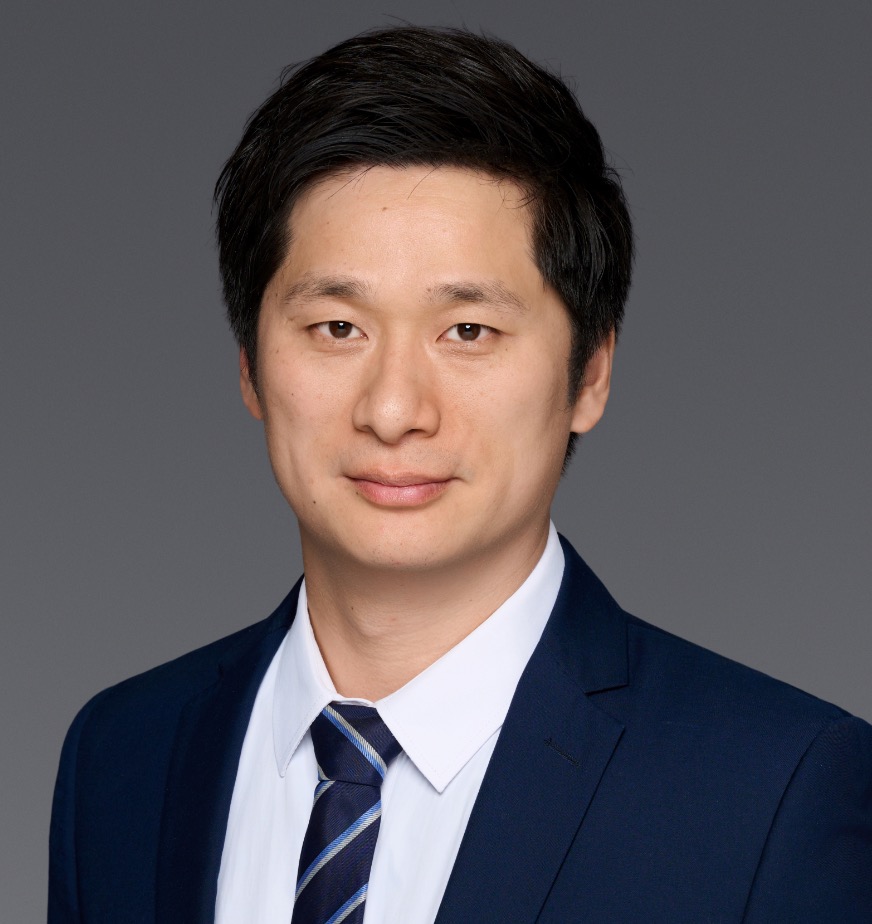
Weiqing Fang, Associate Researcher
Department of AI+ Ceramic Materials Research
https://www.sic.cas.cn/kybm/skl/yjly/nyhj/jszx/
State Key Laboratory of Advanced Ceramics
Shanghai Institute of Ceramics, Chinese Academy of Sciences
Email: fangweiqing@mail.sic.ac.cn
Address: 585 Heshuo Road, Jiading District, Shanghai 201899, China
Research Areas
AI algorithms for multimodal data fusion in materials microstructure analysis, includes: AI-driven analysis of numerical, spectral, and image-based microstructure data; three-dimensional microstructure generation; temporal reconstruction of microstructure evolution; feature extraction for performance prediction and microstructure optimization; and interpretable structure–property relationship modeling.
Recruiting master’s students to work on AI-enabled materials microstructure analysis, including:
1. Microstructure image analysis
2. Three-dimensional microstructure generation
3. Reconstruction of microstructure temporal evolution
4. Interpretable structure–property relationship modeling
5. Development of microstructure analysis platforms
Education
Ph.D., University of Toronto, Canada
Research topic: Machine-learning study of adhesion performance and failure mechanisms in multilayer composites
M.Sc., York University, Canada
Research topic: Structure–property relationship modeling of electrical conductivity and piezoresistive behavior in carbon nanotube-reinforced composites
B.A.Sc., University of Toronto, Canada
Experience
2025-09 to Present
Associate Researcher, Department of Intelligent Ceramic Materials Research, State Key Laboratory of Critical Ceramic Materials, Shanghai Institute of Ceramics, Chinese Academy of Sciences
2016-02 to 2020-12
Software Systems and Algorithms Lead, KitchenMate Inc., Canada
Engaged in entrepreneurship in the fields of the Internet of Things and artificial intelligence. Developed control algorithms and cloud management systems, and applied machine learning to time-series modeling and predictive analysis of consumer behavior.
Related work won first place in Microsoft’s 2019 Evoke–DisruptAI Innovation Competition.
Publications
Research Projects
Shanghai Institute of Ceramics, Chinese Academy of Sciences Overseas Talent Program, “New Methods for Microstructure Evolution Characterization and Structure–Property Relationship Analysis of High-Performance Ceramics”, 2025-09 to Present, Principal Investigator
Key Project of the National Key Laboratory of Key Ceramic Materials, “New Generative Modeling Methods and Key Technology Development for Cross-scale Inverse Design of Materials,” July 2026-present, Principal Investigator
Natural Sciences and Engineering Research Council of Canada Collaborative Research and Development Project, “Development of a New Class of Sustainable Reinforced Thermoplastic Pipes for Clean Oil and Gas Transport”, 2021-04 to 2024-04, Ph.D. Student
Natural Sciences and Engineering Research Council of Canada Alliance Project, “Sustainable Multi-Material Polymers for New Generation of Low Carbon Footprint Pipelines”, 2022-04 to 2024-04, Ph.D. Student
Highlighted Publications
Fang W.; Pearson A.; Huang Y.; Naguib H.E. Enhanced carbon fiber interface with thermoplastics via nanostructure surface modification: failure, morphology and wettability analysis. Composites Part B: Engineering. 2025, 291: 112054.
Fang W.; Duncan M.; Dua M.; et al. Machine learning-assisted design of multilayer thermoplastic composites: robust neural-network prediction and feature-importance analysis. Macromolecular Materials and Engineering. 2025, 310(9): 70005.
Jiang Y.; Fang W.; et al. Image-to-property deep learning for predicting thermal shock life of APS thermal barrier coatings. Ceramics International. 2026, 52(3): 3663–3670.
Fang W.; Cheng Y.H.; Pearson A.; et al. Carbon fiber reinforced polyethylene composite adhesive at elevated temperatures. Composites Science and Technology. 2023, 244: 110269.
Fang W.; Cheng Y.H.; Pearson A.; et al. A polyamide and polyethylene multilayer composite with enhanced barrier and mechanical properties at high temperature. RSC Applied Polymers. 2024, 2(6): 1170–1181.
Other Publications
Fang W.; Jang H.W.; Leung S.N. Evaluation and modelling of electrically conductive polymer nanocomposites with carbon nanotube networks. Composites Part B: Engineering. 2015, 83: 184–193.
Fang W.; Leung S.N. Elucidation of structure-to-property relationships of piezoresistive polymer-carbon nanotube nanocomposites. Journal of Applied Physics. 2015, 118(4): 044907.
Chen J.X.; Chen T.; Zhang Y.; Fang W.; et al. Conductive bio-based hydrogel for wearable electrodes via direct ink writing on skin. Advanced Functional Materials. 2024, 34(40): 2403721.
Li T.; Ma L.; Huang Y.; Fang W.; et al. Direct ink writing of flexible conductive polymer aerogels with exceptional electromagnetic shielding efficiency. ACS Applied Electronic Materials. 2025, 7(19): 8871–8881.
Liu R.Y.; Sun Y.; Liu S.; Fang W.; et al. Free-standing, multifunctional thermoelectric and acoustic absorbing nanocomposite foams. Advanced Sustainable Systems. 2025, 9: 2400490.
Conferences
“Generative AI-Driven Characterization of Crack Evolution and Failure Mechanism Analysis in Thermal Barrier Coatings”, The First “AI + New Materials” Conference of the Chinese Materials Research Society, Guangzhou, China, 2026.
“Mechanisms for Piezoresistive Behaviours in Polymer/Carbon Nanotube Nanocomposites”, Society of Plastics Engineers Annual Technical Conference, Orlando, USA, 2015.
“Electrical Conductivity Modeling of Carbon Nanotube Networks in Polymer Nanocomposites and Their Foams”, Canadian Society for Mechanical Engineering International Congress, Toronto, Canada, 2014.